TimberTech vs AZEK: Choosing Between Composite and Advanced PVC Decking
Published on

TimberTech vs AZEK is no longer a contest between two companies. AZEK decking is sold today as TimberTech Advanced PVC, so the real choice is between two TimberTech materials: Advanced PVC (the board people still call AZEK), with no wood in it, and TimberTech Composite, a blend of wood fiber and polymers under a protective cap.
In short: Advanced PVC carries the longer warranties and the manufacturer’s top moisture rating, weighs less and comes in Cool Touch colors, and it costs more up front.
Composite sits in a lower price band with 25- and 30-year warranties and a solid feel underfoot. On a covered porch either one works; near a pool, a dock or a wet, shaded spot, PVC is the safer pick.
Why AZEK is now a TimberTech decking line
For years AZEK was both a company name and a decking name, which is where the confusion starts.
The AZEK Company owned the TimberTech decking brand and the AZEK trim brand. On July 1, 2025, James Hardie completed its acquisition of The AZEK Company, and its brand list now includes Hardie, TimberTech and AZEK Exteriors, among others (James Hardie press release).
On the decking side, TimberTech now groups its boards into two engineered materials, Advanced PVC and Composite (TimberTech decking overview).
AZEK Exteriors is the trim and moulding line: fascia, corner boards, column wraps. So when a bid says “AZEK,” ask which product it means. On a deck it should name a TimberTech Advanced PVC collection and color; on the house it may mean PVC trim.
TimberTech vs AZEK side by side
The table below is built from the comparison chart and product pages TimberTech publishes for its own two materials. Where the manufacturer says “select collections” or “select colors,” the feature does not apply to every board in that family.
| What you are comparing | Advanced PVC (sold as AZEK) | TimberTech Composite |
|---|---|---|
| Core | Engineered polymers, no wood or organic filler | Virgin and recycled polymers plus wood flour |
| Protective cap | Capped on all four sides | Three- or four-sided cap, depending on the collection |
| Product warranty | Lifetime limited | 25- or 30-year limited |
| Fade and stain warranty | 50-year limited | 25- or 30-year limited |
| Fire | Select collections: Class A flame spread, Ignition Resistant, WUI compliant | Select collections: Class C flame spread, WUI compliant |
| Heat underfoot | Cool Touch technology in select colors | Gets warm in direct sun; lighter colors help |
| Moisture resistance (maker’s own rating) | Best | Better/good |
| Board widths | Standard 5.5″, wide 7.25″ and narrow 3.5″, depending on color | Standard 5.5″ |
| Recycled content | Up to 65% | Up to 85% |
| Shaping | Can be heat-bent for curves | Straight runs |
| Upkeep | No sanding, staining or sealing; occasional cleaning | Occasional cleaning with soap and water or the maker’s deck cleaner |
| Upfront cost band on the maker’s chart | Higher band | Lower band |
Two lines in that table answer the most common questions. “Which TimberTech decking is most expensive?” Advanced PVC sits in the higher band on the maker’s own chart.
“Which lasts longest?” Advanced PVC carries the longer published warranties, lifetime limited on the product and 50 years on fade and stain (TimberTech Advanced PVC; TimberTech Composite). A warranty is not a lifespan, so read the terms for the exact collection on your quote.
Which board fits which Lowcountry deck
The homes on our published sea island projects sit on raised foundations, with covered porches, stairs and landings on more than one side. Each of those spots can call for a different answer, even on the same house.
| If the boards go on… | Lean toward | Why |
|---|---|---|
| A covered porch under a full roof | Either | Sun and standing rain are limited; pick on look, feel and budget |
| An open deck facing south or west | Advanced PVC in a lighter Cool Touch color | TimberTech says select PVC colors stay cooler than competing composites; any board warms in July sun |
| A pool deck, dock or boards that stay damp in shade | Advanced PVC | No wood in the core and the maker’s top moisture rating; TimberTech describes its PVC as ideal for pools and coastal homes |
| A large deck where the budget leads | Composite | Lower upfront band, with a cap that still resists moisture and stains |
| Curved edges, borders or mixed board widths | Advanced PVC | Only the PVC line offers narrow and wide boards and heat bending |
| Stairs and landings used daily | Either, matched to the main deck | Keep one material and color so treads, risers and fascia age the same way |
If you are still deciding whether to go with a manufactured board at all, our comparison of composite decking vs Ipe covers the hardwood side of the question.
What the South Carolina code asks of both
The building code does not pick a winner between the two lines, but it sets rules that apply to both.
Under the 2021 South Carolina Residential Code, plastic composite deck boards and stair treads, or their packaging, must carry a label showing compliance with ASTM D7032, including the allowable load and maximum span (R507.2.2.1). The span on that label is what sets the joist spacing under the boards, not the joist spacing the framer is used to.
Fire is the second point. The code caps the flame spread index of these deck boards at 200 (R507.2.2.2), and a Class C rating already falls inside that cap.
The Class A, Ignition Resistant and WUI listings are aimed mainly at wildfire-prone areas (WUI stands for wildland-urban interface), so on the Carolina coast moisture and heat tend to weigh more in the choice than fire.
The third point is the hardware. The deck fastener table requires stainless steel fasteners and connectors for decks within 300 feet of a salt water shoreline (Table R507.2.3, SC Residential Code 2021, chapter 5). On island and marsh-front lots, measure that distance before the hardware is ordered; the rule applies whether the boards are PVC or composite.
The porches on our published projects
Our published exterior trim scope lists decking in Ipe, TimberTech and AZEK, next to fascia, soffit, porch ceilings and custom brackets.
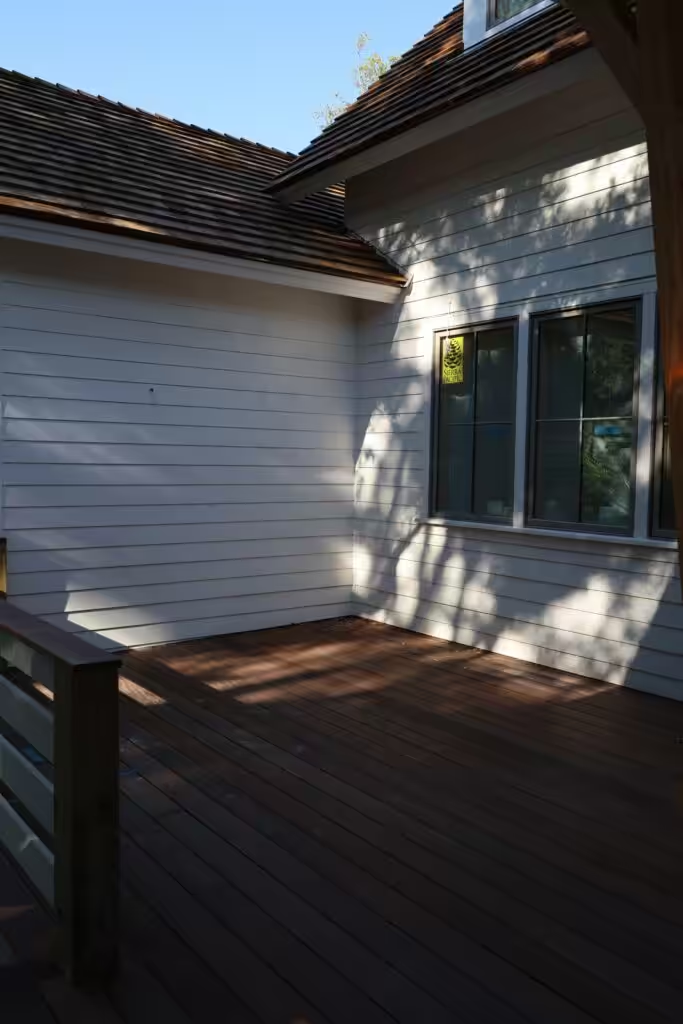
The photo above comes from a raised sea island home with timber-post porches that CHS Built framed and finished; the decking material on that porch is not identified on the project page, so we are not labeling it here.
What those houses show is the setting most Lowcountry decks share: elevated floors, deep covered porches, stairs that come down to sandy ground, and salt air on every side. That is the setting where the PVC-or-composite choice gets made, often porch by porch rather than house by house.
What moves the price between the two
Decking prices change over time, so this page leaves numbers out. These are the factors that decide where a TimberTech deck lands, whichever line you choose:
- The line and collection. Advanced PVC sits in a higher band than Composite on TimberTech’s own chart, and collections within each line differ.
- Board widths and layout. Mixed widths, borders, picture framing and diagonal runs take more cutting and more waste than straight runs.
- Joist spacing. If the board’s label calls for closer joists than the existing frame has, the framing under the deck changes.
- Fasteners. Hidden clips or face screws, and stainless steel within 300 feet of salt water.
- Stairs, fascia and railing. Treads, risers, matching fascia boards and the railing system carry their own material and labor.
- Access. Raised homes, tight island lots and long carries from the street add labor time.
If you have plans or a porch layout, talk to CHS Built about the decking package along with the rest of the exterior trim. We will price the line you choose and show what changes if you switch.
Keep reading