PVC Trim vs Wood Trim: Which Belongs Where on a Coastal Home
Published on
PVC trim and wood trim fail in opposite ways. Wood holds its size in the sun but takes on water at its ends and joints, so paint and detailing decide how long it lasts. Cellular PVC takes on almost no water, but it grows and shrinks with temperature, so fastening and glued joints decide how good it looks.
For the wet, low and hard-to-reach trim on a coastal house, PVC is usually the lower-maintenance choice; for stained or natural wood looks and structural porch pieces, wood stays. Most Lowcountry homes end up with both, and the work is in putting each one where its weakness does not matter.
PVC trim vs wood trim, side by side
The PVC column draws on the installation guide for AZEK Trim and Moulding, a cellular PVC trim line; check the guide for the brand on your quote, since details vary (AZEK Trim & Moulding Install Guide, 08/2025).
| Question | Cellular PVC trim | Wood trim |
|---|---|---|
| Water | Absorbs almost no moisture | Absorbs water, fastest through end grain and open joints |
| Heat | Expands and contracts with temperature; dark colors move more | Moves mostly with moisture, little with heat |
| Joints | Glued with cellular PVC cement, scarf joints preferred | Caulked or lapped; joints are where water gets in |
| Fasteners | Stainless steel or hot-dipped galvanized, into solid wood | Corrosion-resistant nails; in preservative-treated wood, hot-dipped galvanized, stainless, silicon bronze or copper (R317.3) |
| Finish | Can stay unpainted; if painted, 100% acrylic latex in lighter colors | Must be painted or stained and kept up |
| Natural wood look | No; it is a solid white or painted product | Yes, including stained and clear finishes |
| Near the ground or flat surfaces | No decay rule applies to it | Wood siding and framing within 6 inches of the ground must be naturally durable or treated |
| Tools | Cuts, routs and drills with woodworking tools | Standard carpentry |
What is the downside of PVC trim? Movement. Long runs of fascia or frieze in full sun change length through the day, and a joint that was only nailed will open. That is why the installation rules below matter more than the brand.
Where each one fits on a raised Lowcountry house
Raised homes on piers put a lot of trim close to wet surfaces: skirt boards near grade, porch trim at deck level, casings above stair landings. The table follows that logic, piece by piece.
| Trim location | Lean toward | Why |
|---|---|---|
| Skirt board and water table near grade | PVC | Splash zone; wood siding and framing there must be durable or treated under R317.1 |
| Trim where porch floors and steps meet the wall | PVC | Within 2 inches of porch slabs, steps and similar surfaces exposed to weather, the same code rule applies to wood siding |
| Window and door casings | Either | PVC skips the paint cycle; wood needs flashing above it (R703.4) and paint upkeep |
| Corner boards and frieze in full sun | PVC in a light color, or wood | Long sunny runs need PVC’s expansion allowance and glued joints |
| Fascia behind gutters | PVC | Gutter overflow keeps that board wet, and PVC absorbs almost no moisture |
| Stained brackets, posts and cap rails | Wood | Natural grain and structural sizes; exposed structural pieces must be durable or treated |
| Porch ceilings | Either | Covered and shaded; see our notes on porch ceiling materials |
The installation rules that make or break PVC trim
Most PVC trim complaints, open miters and wavy fascia, trace back to how it was fastened. The AZEK guide lists these requirements, among others:
- Use stainless steel or hot-dipped galvanized fasteners that reach at least 1-1/2 inches into solid wood. Staples, small brads and wire nails are not allowed.
- Put two fasteners into every framing member, keep them within 2 inches of each board end, and use two fasteners on each side of every joint.
- Glue PVC-to-PVC joints with cellular PVC cement, and favor scarf joints over butt joints.
- When properly fastened, allow 1/8 inch per 18 feet for expansion and contraction, and leave room at the ends of glued runs.
- If painting, use 100% acrylic latex with a light reflective value (LRV) of 55 or higher; darker colors need coatings with solar-reflective pigments. Paint can take up to 30 days to fully cure.
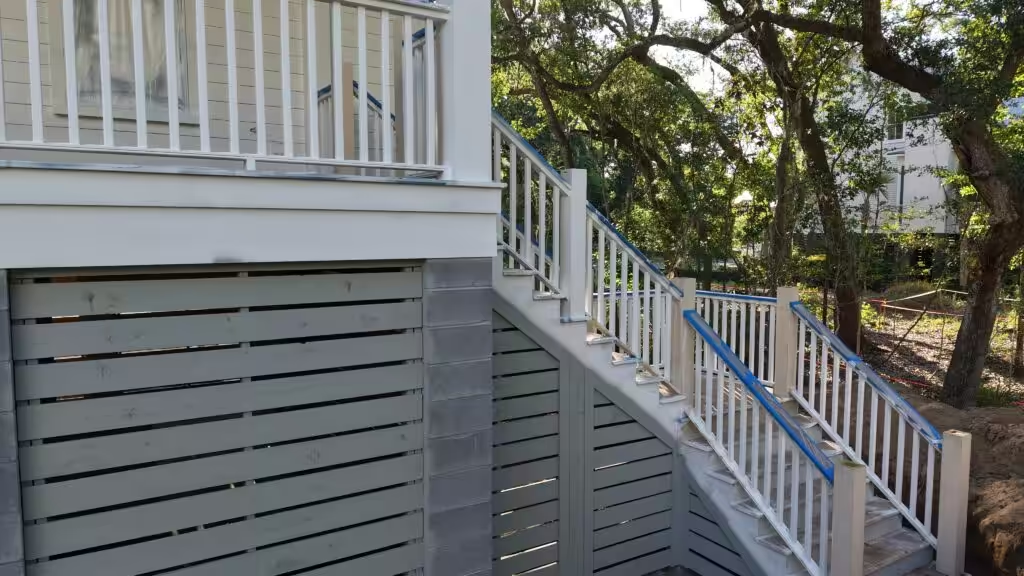
On a sea island house like this one, the eave and frieze runs are long and sit in the sun for much of the day.
Runs like these are where the 1/8-inch-per-18-feet allowance and glued scarf joints earn their keep; the project page does not name the trim material, and the photo alone cannot tell PVC from painted wood.
What keeps wood trim alive near the coast
Wood trim lasts when water cannot sit on it or soak into it. The 2021 South Carolina Residential Code sets two rules that apply directly (R317.1; R703.4):
- Wood siding, sheathing and wall framing within 6 inches of the ground, or within 2 inches of concrete steps, porch slabs, patio slabs and similar horizontal surfaces exposed to weather, must be naturally durable or preservative-treated (R317.1).
- Corrosion-resistant flashing must run continuously above all projecting wood trim (R703.4).
The same section of R317.1 covers structural porch supports: posts and beams exposed to the weather without a roof or overhang to protect them must be durable or treated. Beyond the code, the upkeep is simple to state and easy to skip: keep the paint intact, keep caulked joints closed, and fix the first soft spot before it spreads.
Termites, fire and the fiber cement option
Is PVC termite proof? PVC contains no wood, so it gives termites nothing to eat; the framing behind it still does, which is why the gaps and penetrations around trim still need sealing.
Is PVC trim water resistant? Yes; the AZEK guide describes its trim as absorbing almost no moisture. The same guide notes that AZEK’s lifetime limited warranty does not cover the performance of painted finishes, so paint on PVC is maintained like paint on anything else.
Fiber cement trim is the third option. James Hardie says its Hardie Trim products carry a Class A flame spread rating under ASTM E84 (James Hardie, fire resistance). It is painted like wood and is often chosen to match fiber cement siding.
Brand names add their own confusion: AZEK Exteriors is a trim line, while AZEK decking is now sold under TimberTech, as we explained in TimberTech vs AZEK.
Trim on our sea island projects
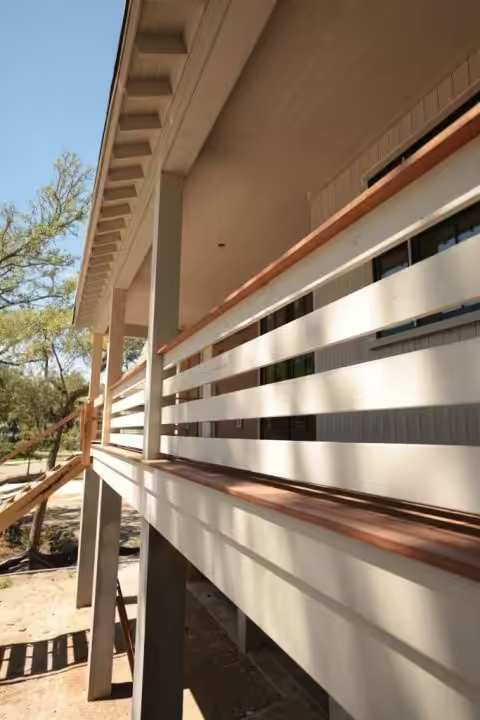
The trim packages we publish include fascia, soffit, corners, ceilings, custom brackets and trim detailing.
On porches like this one from our gallery, painted boards and natural wood sit side by side: the railing boards are painted, while the cap rail keeps its wood finish. The Jack Island home with stacked porches shows the same mix of white trim, stacked porches and railings at house scale.
What moves the cost of an exterior trim package
Trim prices change with material markets, so we keep numbers off this page. The cost of a trim package depends on:
- Material: PVC, wood species and grade, or fiber cement, and whether it arrives primed or factory-finished.
- Profiles: flat boards, built-up crowns, brackets and custom millwork.
- Linear footage and height: two- and three-story eaves on raised homes need staging or lifts.
- Paint: field painting, color choice and cure time before the next trade.
- Details: glued joints, flashing above wood trim, and how trim meets siding, windows and porches.
If you are building or re-trimming on the coast, ask CHS Built to price the trim package along with the siding, so both are detailed together.
Keep reading