LP SmartSide vs Hardie Board: What Each Maker Promises for a Coastal Carolina Home
Published on
The most common mistake in the LP SmartSide vs Hardie board debate is comparing brochure adjectives instead of what each maker puts in writing. Both are serious siding products. They fail differently, and their warranties cover different things. On a home near the Charleston marshes, those differences are the decision.
The short version: Hardie board is fiber cement, rated noncombustible, with a 30-year non-prorated limited warranty on the board. LP SmartSide is treated engineered wood, with five years of full labor-and-material coverage, prorated material coverage to year 50, and hail coverage in writing. Choose by fire exposure, finish plan and the warranty terms you value most.
What each board is made of
James Hardie describes its siding as cement, sand and cellulose fiber, sold in climate-specific formulations it calls the Hardie Zone System. The HZ10 line is the one pitched against sun, hurricane-force winds and heavy rain.
LP SmartSide is engineered wood. LP says every SmartSide product is treated with adhesive resins, water-resistant waxes and zinc borate to help protect against moisture intrusion, and that the treatment gives resistance to fungal decay and termites.
That difference in substrate explains most of what follows. A cement-based board does not burn and does not feed insects. A treated wood board relies on its treatment and its finish to keep moisture out.
Side by side: what the manufacturers publish
| Topic | Hardie board (James Hardie) | LP SmartSide (LP Building Solutions) |
|---|---|---|
| Substrate | Fiber cement: cement, sand, cellulose fiber | Engineered wood treated with resins, waxes and zinc borate |
| Fire | Noncombustible per ASTM E136; Class A flame spread per ASTM E84 | No noncombustible rating for the siding in the LP sources reviewed |
| Decay and insects | “Holds no appeal” to termites and woodpeckers | Zinc borate for resistance to fungal decay and termites |
| Wind and impact | HZ10 marketed for hurricane-force winds; built to withstand windblown debris in coastal areas | Lap siding designed for wind gusts up to 200 mph; hail up to 1.75 inches covered when properly installed and maintained |
| Board warranty | 30-year limited, transferable, non-prorated | 5/50-year limited: 5 years of 100% labor and material, then prorated material |
| Factory finish warranty | ColorPlus: 15-year prorated limited, covers paint and labor | ExpertFinish: 5/15/50-year limited |
| Coastal version | HZ10 formulation | ExpertFinish Coastal Capsule, launched April 28, 2026, sold from North Carolina to Florida and along the Gulf |
Sources: James Hardie pages on the Hardie Zone System and ColorPlus finishes; LP pages on the 5/50 limited warranty and the Coastal Capsule launch. All read on October 9, 2026.
Reading the two warranties line by line
People often ask how long each siding lasts. Neither maker states a service life in these documents; the warranty is the closest written commitment, so read it closely.
LP’s 5/50 is two warranties in one. For the first five years LP covers 100% of labor and material. After that, coverage is material only and prorated, meaning LP pays a shrinking share of the material cost each year through year 50.
LP also states that incorrect installation does not void the whole warranty, only the damage that installation caused.
James Hardie’s board warranty runs 30 years without proration and transfers to the next owner, which matters if you might sell. The factory paint is a separate promise: ColorPlus finishes carry a 15-year prorated limited warranty covering paint and labor against peeling, cracking and chipping.
Both warranties assume the siding went up the way the maker’s instructions say. Ask your installer which installation guide they follow and keep a copy with your closing papers.
Profiles, colors and upkeep
Both makers sell whole exterior systems, not just lap boards. James Hardie’s line includes Hardie Plank lap siding, HardieShingle, architectural panels, Hardie Trim and Hardie Soffit. LP’s SmartSide line includes lap siding, shakes, nickel gap, trim and fascia, and soffit.
For color, Hardie’s factory finish is ColorPlus, and LP’s is ExpertFinish, a 16-color portfolio from which the Coastal Capsule takes six hues. LP also sells primed SmartSide for painting on site.
That choice is the real upkeep decision. A factory finish comes with its own warranty; a site paint job depends on the paint system and the crew applying it, so ask who stands behind it.
Salt air, humidity and hurricane season
LP sums up the coastal problem in its own words: high humidity, salty air and intense UV demand more from building materials. Its answer for 2026 is a prefinished color line for the coast. James Hardie’s answer is the HZ10 formulation.
Whatever the board, the wall behind it decides a lot. The state’s residential code, the 2021 IRC as amended by South Carolina in 2023, requires a continuous water-resistive barrier behind the siding and shingle-fashion flashing at windows, doors and roof intersections (IRC R703.2 and R703.4).
Details matter too. James Hardie’s lap siding is sold in 12-foot lengths, so longer walls get butt joints, and the company recommends 6-inch-wide flashing behind each joint, lapped 1 inch over the course below. For more on the storm side of this decision, see our guide to siding that holds up to hurricanes.
Which one fits which house
Is LP better than Hardie? Neither wins everywhere. Use the situation, not the brand, to decide:
| If this matters most | Lean toward | Why, in the makers’ words |
|---|---|---|
| Fire exposure: tight lots, nearby structures | Hardie board | Noncombustible per ASTM E136 |
| Long board coverage that does not shrink each year | Hardie board | 30-year non-prorated, transferable |
| Full labor coverage early on, and hail named in writing | LP SmartSide | 5 years at 100% labor and material; hail up to 1.75 inches |
| Factory color with its own finish warranty | Either | ColorPlus 15-year or ExpertFinish 5/15/50 |
| A product line marketed for the coast | Either | HZ10, or the ExpertFinish Coastal Capsule; check what local suppliers stock |
The main drawbacks follow from the same facts. LP SmartSide is a wood product with no noncombustible rating in its published material, and its coverage turns prorated after year five. Hardie board’s finish coverage is shorter and prorated, even though the board itself is covered for 30 years.
Which of the two our crews install
CHS Built’s published siding scope names fiber cement siding installation in lap, board-and-batten and shake profiles, “detailed to take salt air, humidity, and storms.” LP SmartSide is not on that list, so if your plans call for it, raise it at the start.
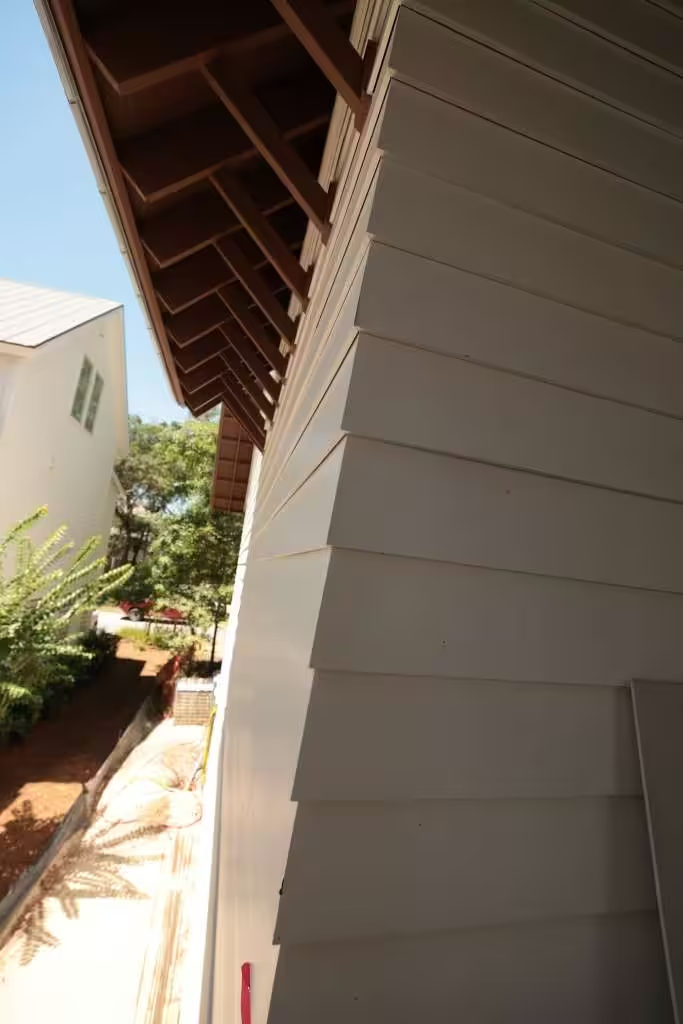
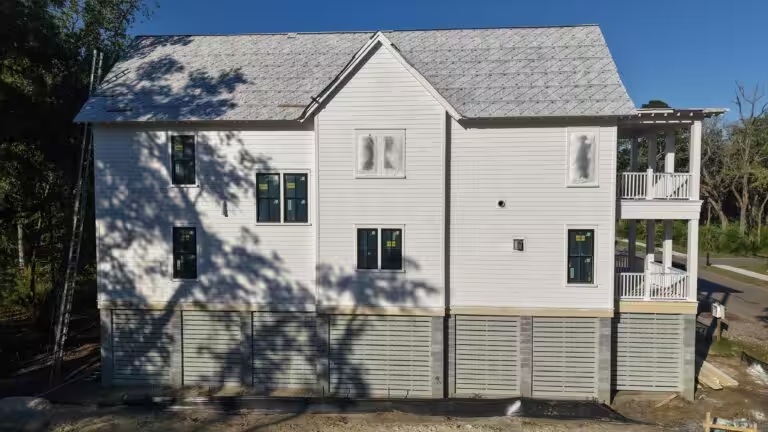
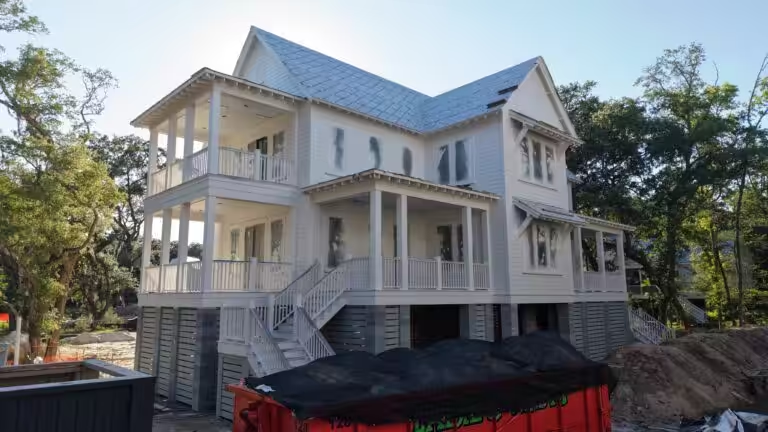
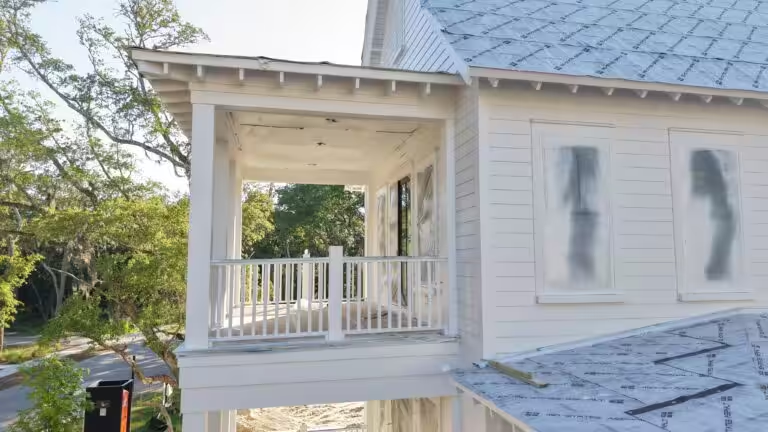
The close-up above, from our project gallery, shows lap siding courses running under an open-rafter overhang. For a full exterior, see the two-story elevated home on Jack Island, clad in white lap siding with stacked covered porches.
What drives the price difference on a real project
The board is only one line of a siding quote. What moves the total, whichever product you pick:
- Product line and finish: primed for site painting, or factory-finished with its own warranty.
- Profile: lap, board-and-batten or shake, and how much trim each needs.
- Wall height and access, which grow on raised coastal homes.
- Joints and flashing: butt-joint flashing on long walls, kickouts, window and door flashing.
- Corners, openings and transitions to porches and roofs.
- The weather barrier behind the siding, which the code requires either way.
If you are deciding between the two for a new build, ask CHS Built to price the siding package with your plans in hand. The comparison gets clearer when both options carry the same flashing and trim details.
Keep reading