
Siding Contractor in Charleston, SC
CHS Built is a siding contractor in Charleston, SC that installs fiber cement siding in lap, board-and-batten and shake profiles on new homes, additions and remodels across the Lowcountry. We work for builders, general contractors and homeowners, and we also handle the housewrap, flashing and trim that the siding depends on.
See it on real houses first: three new homes on the sea islands, two of them on Jack Island, each with its own photo gallery on our site.
Call or text (843) 263-3823 about your siding package
Who calls us for siding work
Our published siding projects are all new construction, and the calls come from three kinds of projects:
- Builders and GCs who need a siding and trim crew that plugs into their schedule and leaves the walls ready for the next trade.
- Owners building a new home who want one team for the shell: framing, sheathing, weather barrier, windows and doors, then the siding.
- Additions and remodels where new walls are clad and tied into the existing house, and the barrier and flashing have to lap into the old wall correctly.
If your project is one of these, the fastest start is to send the plans and the elevations. They show the wall heights, the openings and the trim details that drive the scope.
Lap, board-and-batten and shake: what we install
Our published siding scope lists fiber cement and three profiles: lap, board-and-batten and shake. Each profile handles water and wind a little differently, and each changes the trim around it.
| Profile | Where it shows up on Lowcountry homes | What we watch on the wall |
|---|---|---|
| Lap | The main walls of most coastal and farmhouse-style homes, including the three siding projects in our gallery | Consistent lap, protected butt joints, clean ends at corners and casings |
| Board-and-batten | Gables, dormers and accent walls, or a full vertical look | Horizontal joints on tall walls, where water can sit; battens over the panel joints |
| Shake | Gable ends and upper walls, often mixed with lap below | Course alignment at windows and the transition line between profiles |
Choosing between the two most common looks? Our article on board and batten vs lap siding compares how each one sheds rain and how it is fastened.
If the plans name a brand, tell us early.
Vinyl is not on our published scope; if your plans call for it, raise it on the first call. How rated vinyl compares with fiber cement in high wind is covered in our hurricane siding comparison.
Charleston weather decides the details
Siding on this coast is detailed for wind-driven rain first. NOAA's National Centers for Environmental Information put the 1991–2020 average at Charleston International Airport at about 52.5 inches of rain a year, and close to half of it, about 25.8 inches, falls from June through September.
Those months overlap the Atlantic hurricane season, which runs from June 1 to November 30, according to the National Hurricane Center. So the rainiest months are also the months when storms push water sideways against a wall.
The South Carolina Residential Code answers that with layers, not with the siding alone: a water-resistive barrier over the sheathing (R703.2) and corrosion-resistant flashing at windows, doors and wall-roof intersections (R703.4). Both sit in chapter 7 of the code the state adopted from the 2021 International Residential Code.
Wind is the other half. Material choice, fastening schedules and what the code asks above 30 psf of design wind pressure are covered in our guide to the best siding for hurricanes.
What goes on the wall before the first board
When the barrier and flashing are in our scope, this is the order we hold to, and the order matters more than any single product:
- Sheathing checked for flat, fastened panels, since siding follows whatever is under it.
- Weather barrier lapped shingle-fashion so water runs out, not in. On the Kiawah River home in our gallery, that layer is HydroGap.
- Openings flashed before the casings go on: rough openings set, taped and lapped into the barrier.
- Roof-to-wall spots handled with step flashing and a kickout flashing wherever a roof edge dies into a wall.
- Trim and siding installed so every joint either sheds water or is backed by flashing.
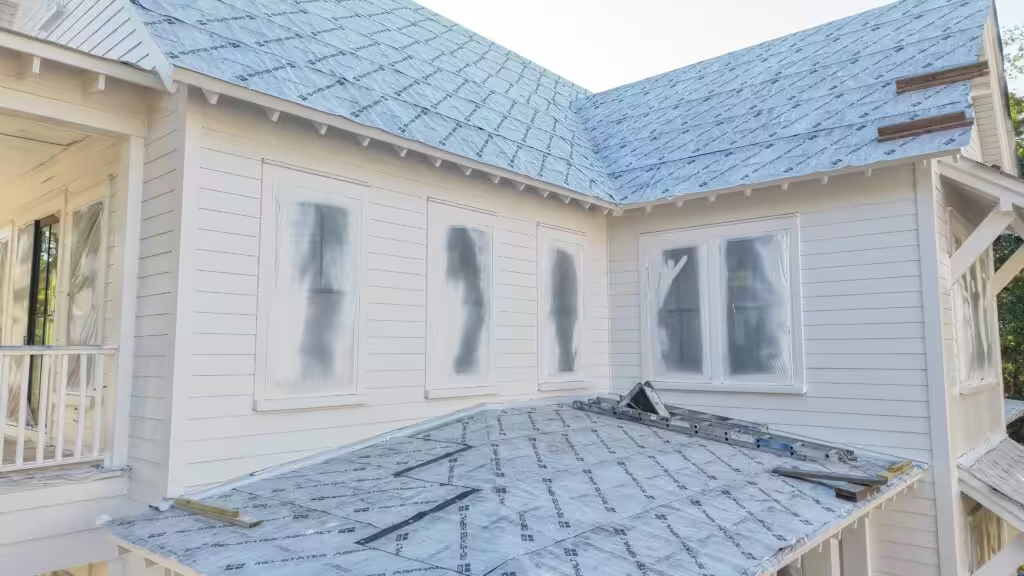
When one crew owns the barrier, the flashing and the siding, nobody has to guess what the previous trade left behind.
How a siding job runs with us
1. Plans and walk
We review the elevations, wall sections and window schedule against your timeline, then look at the site with you.
2. Written scope and price
You get the scope and the price in writing: profiles, trim, barrier and flashing work, and what is excluded. Changes along the way are handled as change orders.
3. Install in sequence
Barrier and flashing go on first, then trim and siding. We plan the schedule up front against your other trades and keep each stage moving.
4. Walkthrough and punch list
We walk the finished walls with you or your superintendent, close out the punch list and hand the work back ready for the next trade and final sign-off.
Call or text (843) 263-3823 to put your siding on our schedule, or send your plans through our project form.
Siding on our Lowcountry projects
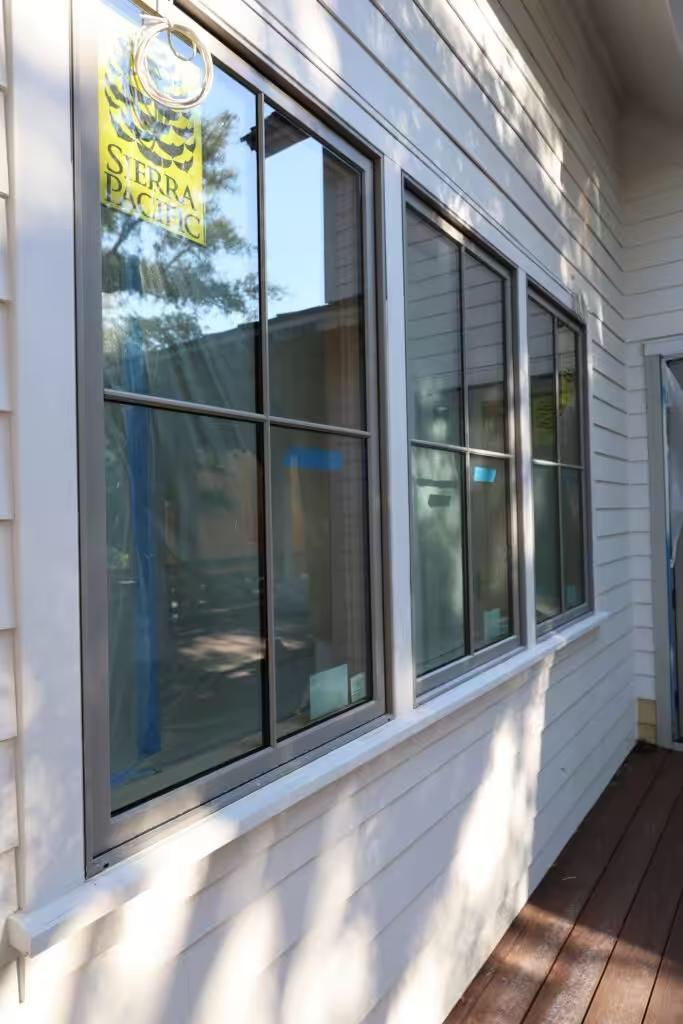
Every photo on this page comes from our own jobs. Each project has a full gallery:
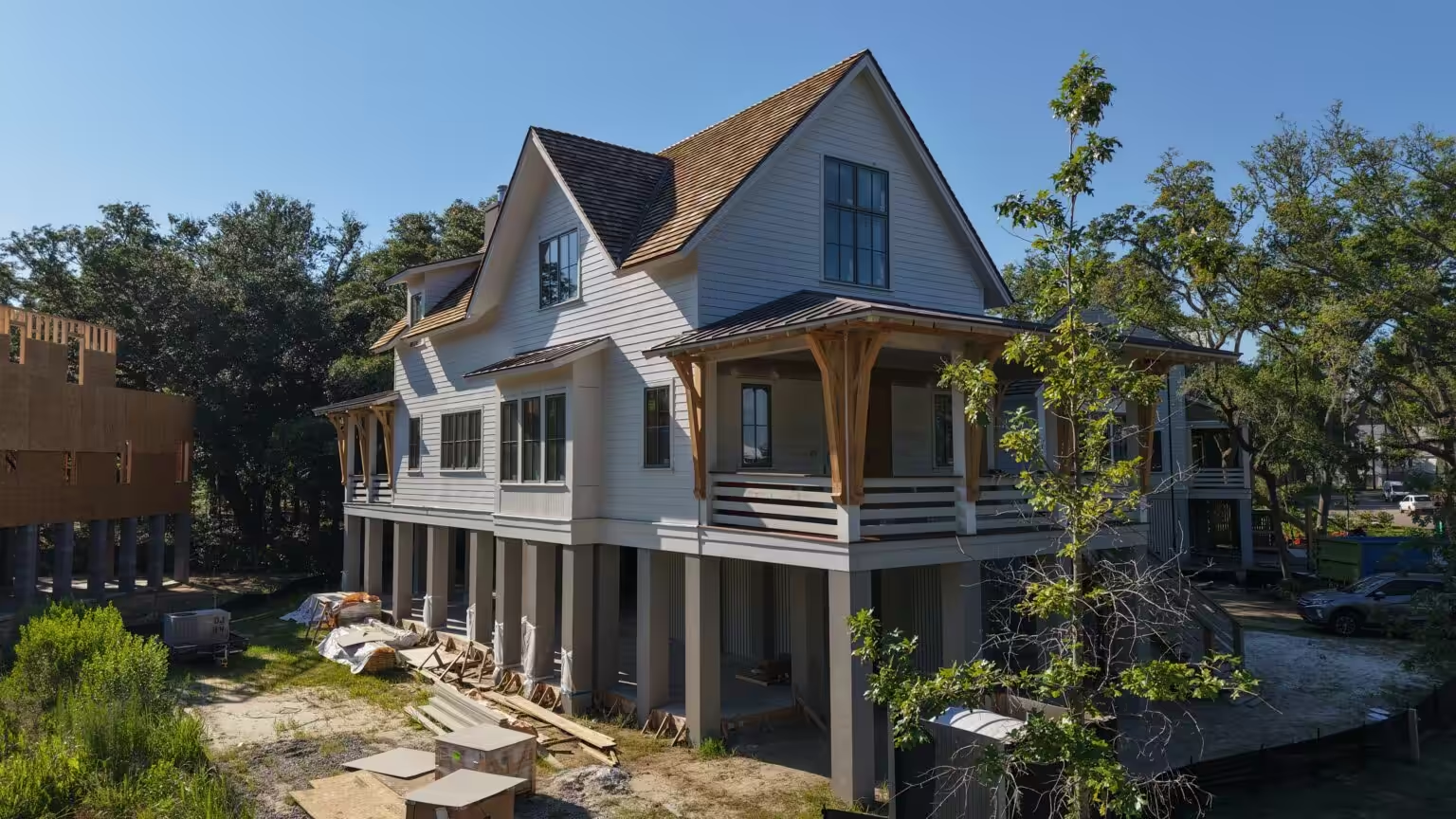
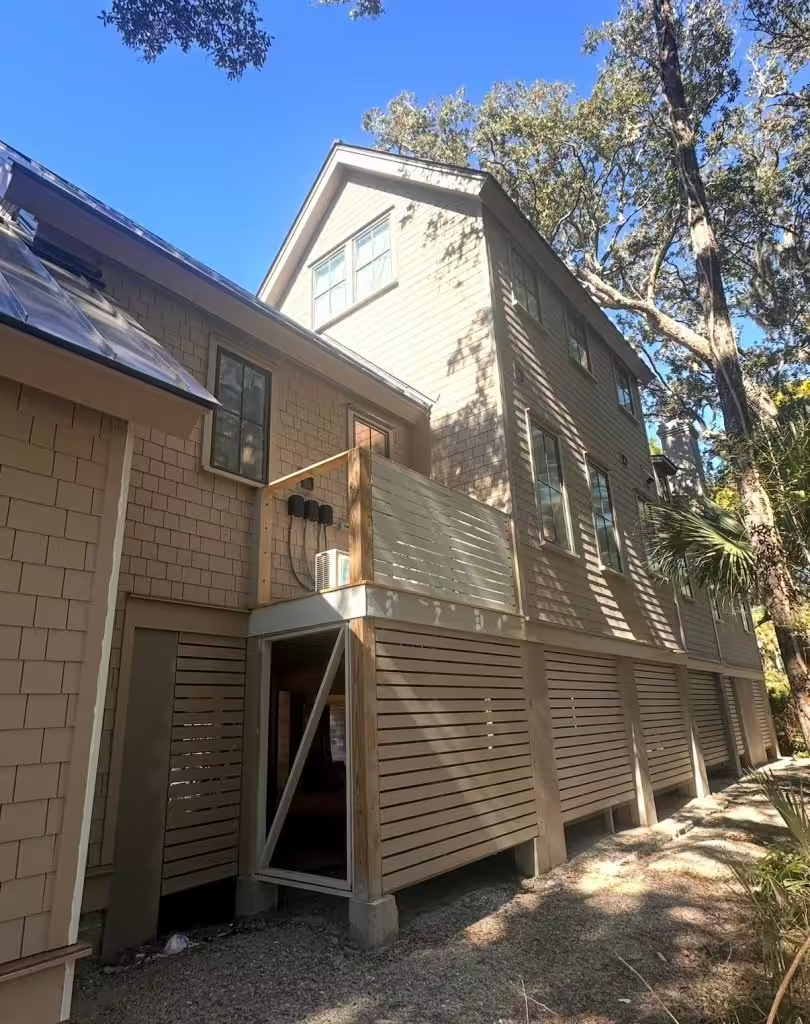
- Two-story elevated home on Jack Island: white lap siding, stacked covered porches and a piered foundation with slatted skirting, framed and finished by our crew.
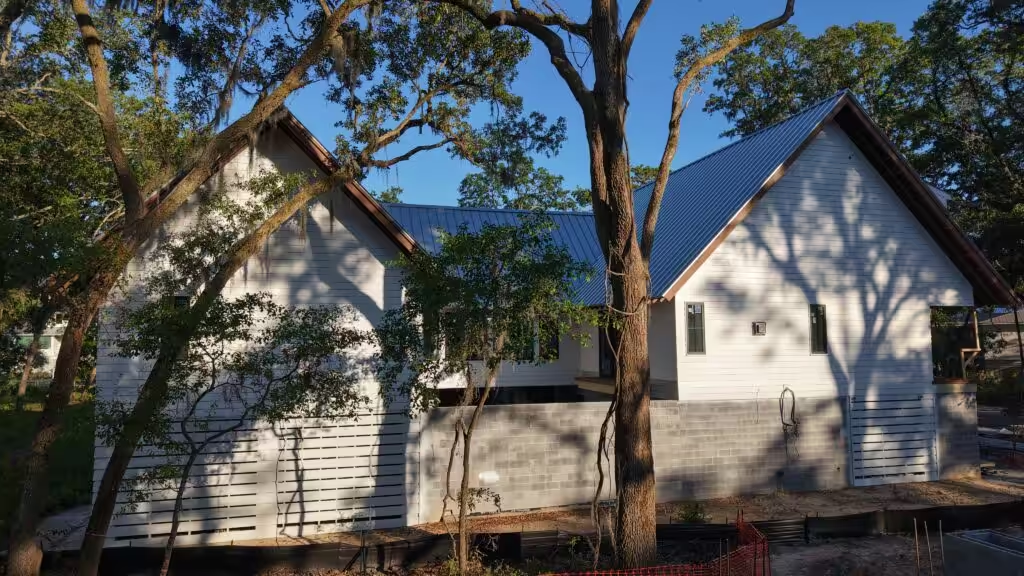
- Jack Island home with a standing-seam roof and dormers: lap siding over a raised masonry foundation, timber-post porches and the metal roofline detailed to shed water.
- Sea island home among the live oaks: pier foundation, lap siding, timber porch brackets and a cedar shake roofline.
What moves the price of a siding package
There is no fair price per wall until the plans are read, because two houses of the same size can carry very different siding work. These are the things that change the number:
- Scope: siding only, siding with trim, or the full shell from framing to siding
- Wall height and how far the house is raised, which sets scaffolding or lift time
- Profile mix, since lap, board-and-batten and shake each need their own trim
- Number of openings, corners, dormers and roof-to-wall transitions to flash
- Weather barrier and flashing work included in the package
- Access and staging on the lot, which matters most on the islands
- The builder's schedule and how the work is phased
Call or text (843) 263-3823 for a written siding price built from your plans.
Who you will work with
CHS Built was started by Tiago to do residential construction "the right way here in the Lowcountry," in his words on our home page. The company grew from framing crews into a full exterior team, which is why our siding work starts at the frame and the barrier, not at the first board.
Builders who need the structure too can see our framing and exterior work for builders.
When another company is the better call
- A few damaged boards on an older house. Our published projects are full installations. Call before booking a visit if a small repair is all you need.
- Vinyl-only jobs. Vinyl is not on our published scope.
- Siding over hidden problems. Wet or soft sheathing and missing flashing have to be fixed before new siding goes on. If that is likely on your house, plan for the extra work before you compare quotes.
Siding questions we hear
Do contractors do siding, or do I need a separate company?
On most new homes, the general contractor hires a siding crew as a subcontractor. That is the role we fill for builders and GCs. Owners who are building or remodeling can hire us directly for the siding or for the whole shell.
Can you replace just a few pieces of siding?
Usually a few boards can be cut out and replaced, if the same product and profile are still made, and the wall is then repainted so the patch blends. Matching an old color or a discontinued profile is the hard part. Small repairs are not what our project pages show, so ask first.
Which siding holds up best on the Charleston coast?
Fiber cement is the usual choice on new coastal homes, but the fastening and the barrier behind it matter as much as the board. Our hurricane siding guide walks through the code limits.
Do I need a permit or design approval to change siding?
Inside the City of Charleston, exterior alterations go through a building permit, and the City's permitting guidance adds a Board of Architectural Review application when the work is in a designated historic district.
The BAR reviews changes visible from the street, and its guidelines rule out vinyl, aluminum and cementitious siding on historic buildings. Outside city limits, check with that town or county and any HOA or design board before ordering material.
How early should siding be scheduled on a new build?
Book it when the framing schedule is set. Siding follows the barrier, the windows and the roof-to-wall flashing, so the date depends on those trades. We plan our start against your schedule at the quote stage.
Where we install siding around Charleston
We are based in Charleston and work across the Lowcountry:
- Charleston and west: Charleston, West Ashley, James Island, Johns Island, Folly Beach
- East Cooper: Mount Pleasant, Daniel Island, Isle of Palms, Sullivan's Island, Awendaw, Wando
- North and Berkeley: North Charleston, Hanahan, Goose Creek, Ladson, Summerville, Moncks Corner
- Sea islands: Kiawah Island, Seabrook Island, Ravenel
Not on the list? Ask. We cover the greater Lowcountry.
Call or text (843) 263-3823 · Email office@chsbuiltco.com · Based in Charleston, SC