Composite Decking vs Ipe: Choosing Deck Boards for a Lowcountry Porch
Published on
Composite decking vs Ipe looks like a choice between two kinds of wood. It is closer to a choice between a natural material you maintain and a manufactured product you install by its label.
Ipe is a dense tropical hardwood: real grain, hard underfoot, and it turns silver-gray unless you oil it. Composite boards hold their factory color with washing as the main upkeep, but their spans, fasteners and warranty come from the manufacturer.
On a Lowcountry porch the shortlist usually comes down to how much upkeep you will accept and whether you want real wood. Whichever you choose, if the deck sits within 300 feet of salt water, the South Carolina code calls for stainless steel fasteners and connectors.
“Composite” covers two different boards
Most comparisons treat composite as one material. It is really two families. Wood-plastic composites mix wood fiber with plastic, usually under a protective cap. Capped PVC boards have no wood at all: TimberTech, for example, describes its Advanced PVC decking as having no wood in the core or the cap.
The difference shows up in how each one handles moisture and in the warranty. TimberTech lists a 50-year limited fade and stain warranty and a lifetime limited product warranty for Advanced PVC (TimberTech). Trex lists limited residential warranties from 25 to 50 years depending on the decking line (Trex). Ipe, as lumber, carries no manufacturer warranty of that kind.
Which is cheaper, one brand or another? It depends on the product line within each brand more than on the brand name, so compare specific lines, not logos.
Composite decking vs Ipe, side by side
| Question | Ipe | Composite or capped PVC |
|---|---|---|
| What it is | Dense tropical hardwood sold as lumber | Manufactured board: wood fiber and plastic, or all-polymer PVC, usually capped |
| Color over time | Weathers to silver-gray unless oiled regularly | Holds the factory color within the terms of the fade warranty |
| Main upkeep | Cleaning plus oiling if you want to keep the brown tone | Cleaning |
| Code requirement for the board | Wood decking rules (R507.2.1); Ipe is not on the code’s list of naturally durable species, so it is used as an approved material | Must comply with ASTM D7032 and carry a label with allowable load and maximum span (R507.2.2) |
| Joist spacing | Table R507.7 for 1¼-inch and 2-inch wood; other spans from an accredited grading or inspection agency | The maximum span printed on the board’s label |
| Fasteners within 300 ft of salt water | Stainless steel | Stainless steel |
| Warranty | Depends on the lumber supplier | Manufacturer’s limited warranty (25 to 50 years for the lines cited above) |
| Best fit | Owners who want real wood and accept oiling or the gray patina | Owners who want a steady color and minimal upkeep, installed exactly to the label |
Code references are from the South Carolina Residential Code 2021, Chapter 5, the 2021 IRC as adopted in South Carolina.
What the building code decides for each board
For composite boards, the code is specific.
Plastic composite deck boards, stair treads, guards and handrails must comply with ASTM D7032, and the boards or their packaging must carry a label showing the allowable load and the maximum allowable span (R507.2.2 and R507.2.2.1).
They also need a flame spread index of 200 or less, and boards that contain wood fiber must be decay resistant under the same standard.
For wood, the code asks for No. 2 grade or better lumber that is preservative-treated or “approved, naturally durable” (R507.2.1).
The code’s definition of decay-resistant naturally durable wood names only redwood, cedar, black locust and black walnut (Chapter 2). Ipe is used as an approved material, so confirm with the permit office that it is accepted for your project.
Table R507.7 sets the spacing for wood decking: 1¼-inch-thick boards laid perpendicular to the joists allow 12 inches on a single span and 16 inches on a multiple span, and 2-inch boards allow 24 inches.
Laid diagonally, the spacing tightens. Boards thinner than 1¼ inches are not in the table, so their span has to come from an accredited grading or inspection agency.
The rule that matters most on the coast sits in a footnote to Table R507.2.3: fasteners and connectors exposed to salt water or located within 300 feet of a salt water shoreline must be stainless steel. That applies to the screws or clips holding the boards and to the hangers and connectors under the deck.
Worked example: a 16-foot porch near a tidal creek
Take a covered porch 16 feet long on an elevated house, about 100 feet from a saltwater tidal creek. The numbers below come straight from the code tables, so they apply to either material until the product’s own label says otherwise.
- Joists at 16 inches on center: 192 inches divided into 16-inch bays gives 12 bays, or 13 joists. That spacing works for 1¼-inch wood boards on a multiple span, or for a composite whose label allows 16 inches.
- Joists at 12 inches on center: 16 bays, or 17 joists. That is the code spacing for 1¼-inch wood on a single span, and what a composite label may require for diagonal boards.
- Fasteners: 100 feet from a tidal creek is inside the 300-foot line, so every board fastener, hanger and connector is stainless steel, whichever board goes on top.
The difference between those two layouts is four joists, plus the hangers and stainless fasteners that go with them. That is why the board choice should be made before the framing is ordered, not after.
Covered porch or open deck: where each board works
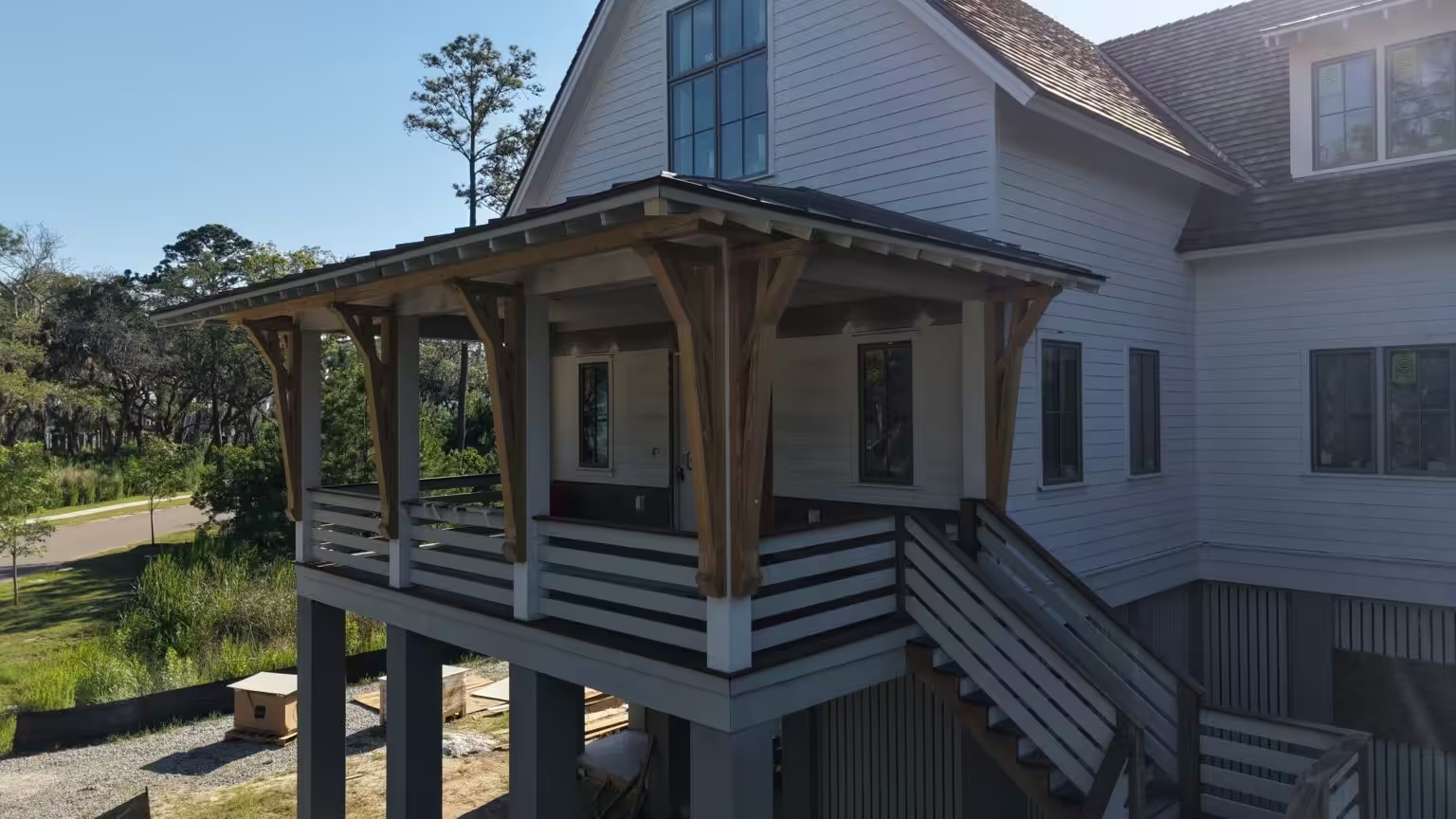
The porches in our project gallery are covered, from the covered porches framed with timber posts on a sea island home to the stacked porches on Jack Island. A roof overhead cuts the direct sun and rain on the boards, which changes how fast any wood weathers and how hot a dark board gets.
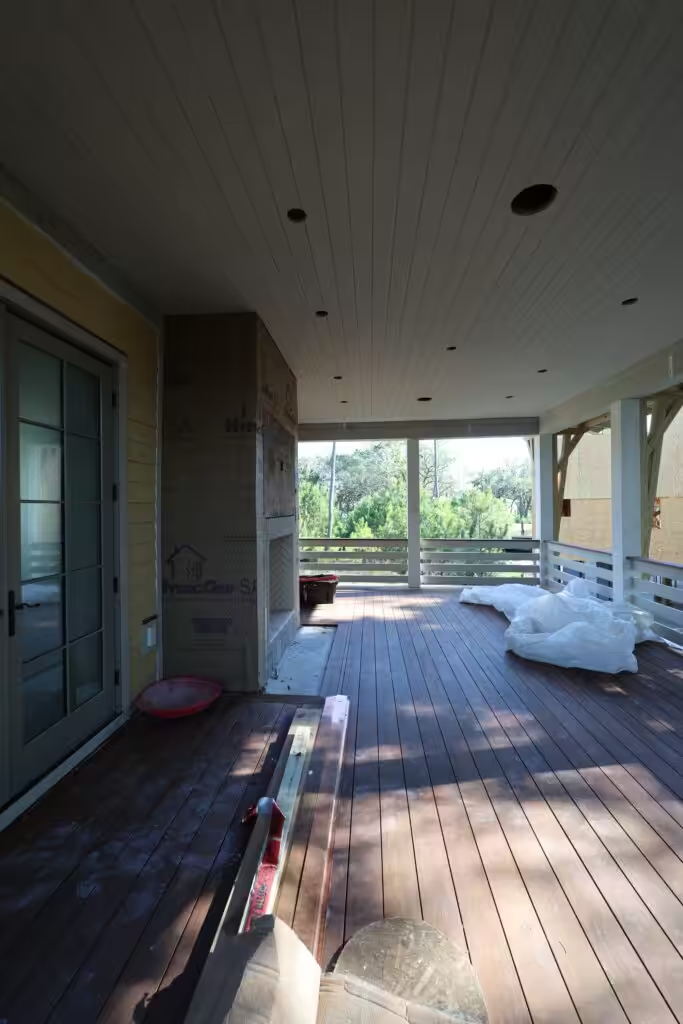
The porch above, from one of our recent builds, shows the typical setting: dark deck boards under a painted ceiling, with the house wall and doors along one side. On an open deck in full sun, ask the manufacturer for surface heat information on the color you are considering, and expect Ipe to gray faster unless it is oiled.
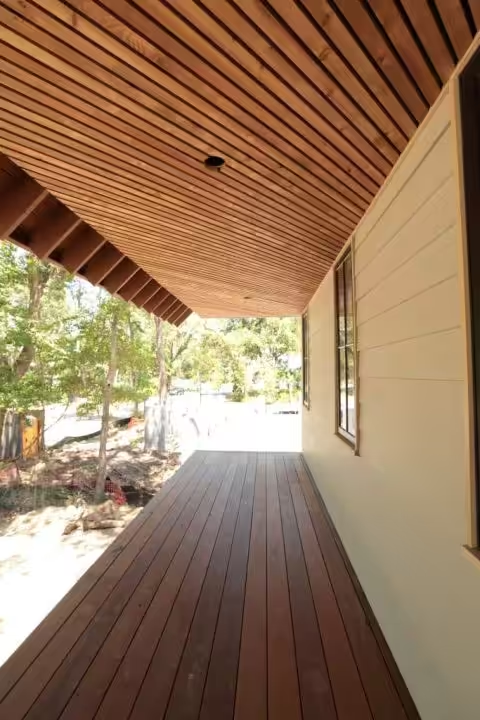
Covered or not, the boards on a porch like this one sit on framing that stays exposed to humid air underneath, so the joist spacing, the fasteners and the connectors deserve as much attention as the board on top.
Buying Ipe that was harvested legally
Ipe is imported.
Under the Lacey Act, it is against the law to import any illegally harvested plant or plant product into the United States, and certain products require a declaration with the scientific name of the species and where it was harvested (USDA APHIS).
Ask your supplier for the species name and harvest origin, and for third-party forest certification if that matters to you.
What drives the cost of a composite or Ipe deck
Material price per board is only part of it, and prices change, so these are the factors to compare when you get a quote:
- The product line, board thickness and color, or the Ipe grade and board size
- Joist spacing required by the label or the table, which sets how much framing goes underneath
- Stainless steel fasteners, clips and connectors within 300 feet of salt water
- Porch or deck height, stairs and landings on an elevated house
- Ongoing upkeep: oiling for Ipe if you want to keep the color, cleaning for both
- Removal of an old deck and access to the lot
Decking in Ipe, TimberTech and AZEK is part of our decking and exterior trim installation in Charleston, along with fascia, soffit, porch ceilings and trim. If you are deciding between boards for a porch or deck, call or text (843) 263-3823 and we can talk through the framing your choice needs.
Keep reading